
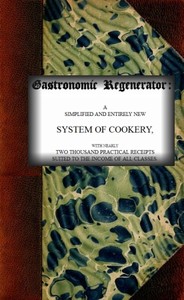
The Gastronomic Regenerator: A Simplified and Entirely New System of Cookery
Let me paint you a picture: London, 1846. The Industrial Revolution is booming, but dinner is often a sad, boiled affair. Enter Alexis Soyer, the most famous chef in the city. He's a showman who ran the kitchen at the ultra-exclusive Reform Club, but he also cared deeply about feeding the poor. 'The Gastronomic Regenerator' is his attempt to bridge that gap. This isn't just a list of recipes; it's his complete philosophy on food.
The Story
There's no traditional plot, but the book's journey is clear. Soyer lays out his case: English cooking is in a dire state. It's wasteful, bland, and stuck in the past. His mission is to simplify French cooking techniques—which were seen as fussy and expensive—and make them accessible. He presents over 2,000 recipes, from 'Potage à la Soyer' to 'Curried Lobster,' but each one comes with his passionate commentary. He explains the 'why' behind the 'how,' teaching principles instead of just steps. He also includes wild sections on everything from organizing a giant charity kitchen to designing the perfect stove.
Why You Should Read It
What grabbed me was Soyer's voice. He's hilarious, exasperated, and deeply enthusiastic all at once. Reading his rants about poorly made gravy feels like listening to a friend complain. You see a mind genuinely excited about making things better. His ideas were radical for the time—emphasizing fresh ingredients, careful seasoning, and presentation. It's a peek into the moment when cooking started shifting from mere sustenance to an art form for the middle class. Plus, the historical asides are golden. His notes on how to cook for 300 people or his 'magic' stove designs show a man obsessed with solving problems.
Final Verdict
Perfect for food history nerds, curious home cooks, and anyone who likes personality in their old books. It's not a modern cookbook you'll use nightly (recipes call for 'a quart of cream' and 'a dozen eggs' rather casually!). But as a read, it's fascinating. You get the blueprint for Victorian fine dining straight from its most charismatic inventor. If you've ever wondered how we moved from boiled beef to Beef Wellington, this book is a big, flamboyant piece of that puzzle. It's less about following the recipes today and more about meeting the fascinating man who wrote them.
This text is dedicated to the public domain. It serves as a testament to our shared literary heritage.
Carol Moore
1 year agoHaving read this twice, the arguments are well-supported by credible references. Truly inspiring.
Mason Scott
1 year agoThis book was worth my time since the narrative structure is incredibly compelling. A valuable addition to my collection.
Jessica Lee
1 year agoCitation worthy content.





Margaret Sanchez
4 months agoComprehensive and well-researched.